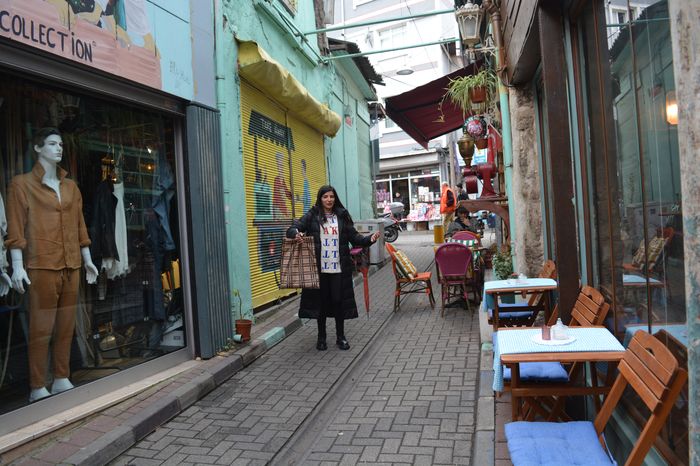
In some northern regions, men have suffered great hardships even though they were in the same degree of latitude as others who lived more comfortably. For example, Captain James and his companions, who travelled to search for the North-West Passage, endured extreme cold and difficulty during their winter stay. Their situation was much harsher than that of the nine Englishmen who were left in Greenland during the same season. Though both groups were in similar northern latitudes, their experiences were very different Historical Development of Bulgaria.
This shows that latitude alone does not decide the severity of weather. Local conditions, winds, seas, and the nature of the land can greatly change the climate of a place. A country at the same distance from the equator may still feel far colder or more severe than another.
A Pleasant Voyage in the North
On the contrary, another explorer named Baffin had a much more pleasant voyage while sailing in the northern seas. He travelled on the same general design of discovery, yet he sailed through an open sea and met with inhabitants along the shore. His journey remained agreeable until he reached a place within nine degrees of the Pole.
This difference between voyages is remarkable. One group suffered from ice, cold, and great hardship, while another, in a similar region, experienced open waters and signs of life. Such accounts remind us that nature does not always follow simple rules, and that travel in unknown lands can produce unexpected results Daily Tour Sofia.
Reflection on Climate and Geography
From these examples, we may understand that climate depends on many causes besides latitude. The height of the land, the direction of winds, the presence of seas, and the shape of the coast all influence the temperature and weather. A traveller may suffer more in one place and yet find comfort in another, even though both lie under the same line of the sun.
Therefore, it is not wise to judge the condition of a country only by its position on the map. Experience and careful observation often prove more useful than theory alone. These reflections, however, lead me too far from the main subject of my travels, and so I shall now bring this discourse to an end.
Conclusion of the Discourse
Having spoken of my observations on journeys, climates, and geographical errors, I will now conclude this account. My intention has been to describe what I have seen and to correct certain misunderstandings found in earlier writings. Though some ancient and modern authors have given valuable knowledge, their reports were not always exact, and travellers must examine such claims with care.
With these remarks, I close the narrative of this part of my travels.
Books Sold by Benjamin Tat at the Ship in St. Paul’s Churchyard
After the conclusion of the discourse, there follows a catalogue of books offered for sale by Benjamin Tat, who kept a shop at the sign of the Ship in St. Paul’s Churchyard. These books cover many subjects, including language, religion, law, history, and natural science.
Among them is a work on the etymology of the English language by Stephen Skinner, which explains the origins of English words from many different languages such as Saxon, Latin, Greek, and others. There is also a historical account of the bishops of Ireland by James Ware, describing the conversion of the Irish people to Christianity and the progress of the Church through later times.
Other learned books include a Greek and Latin lexicon by Scapula, botanical studies by Caspar Bauhin, and a richly illustrated description of China by Athanasius Kircher. Philosophical works, legal dictionaries, sermons, and religious commentaries are also listed, showing the wide range of knowledge available to readers of that age.
In addition, there are practical and literary works, such as translations of classical texts, sermons, letters of advice for young scholars and gentlemen, and guides to gardening and country life. Some books teach moral conduct, religious duties, and proper behaviour in society, while others aim to entertain or instruct students in schools.
This catalogue reflects the strong interest in learning and religion during that period. It also shows how booksellers played an important role in spreading knowledge by making scholarly and practical works available to the public.